
Hawksbill Sea Turtle
 By Tristan Paylado · Published · Updated · 3 min read
Common Names: Hawksbill Sea Turtle / Tortuga Carey Latin Name: Eretmochelys imbricata Length: 62-114cm Weight: 45-68 Kg Diet: Omnivore Lifespan: 30-50 years (est) Frequency: Critically Endangered Range: Pacific and Atlantic Coasts. Prefer shallower coastal...
Common Names: Hawksbill Sea Turtle / Tortuga Carey
Latin Name: Eretmochelys imbricata
Length: 62-114cm
Weight: 45-68 Kg
Diet: Omnivore
Lifespan: 30-50 years (est)
Frequency: Critically Endangered
Range: Pacific and Atlantic Coasts. Prefer shallower coastal waters.
Nesting: Year round on both coasts
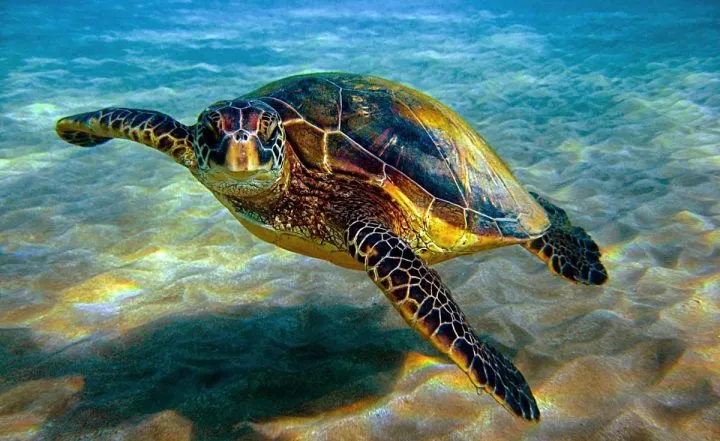
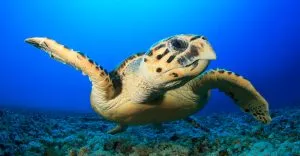
Considered as a critically endangered species, the hawksbill sea turtle (Eretmochelys imbricata) has a similar appearance with other sea turtles and can be found worldwide. The only distinguishing factor between other sea turtles is that Hawksbill have a sharp and curved beak where the tomium, or the cutting edge of a beak, is very prominent. The reason it’s so endangered is that it has the most beautiful shell of any turtle, and its greatly sought after by humans for making jewelry and many types of crafts.
Habitat and Feeding
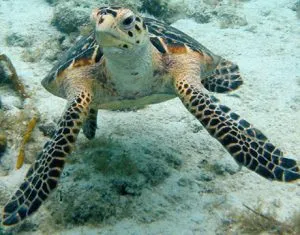
Hawksbill sea turtle, especially matured species, are found in coral reef areas. They usually feast on crustaceans and algae but their preference is this highly toxic reef inhabitants like sponges, cnidarians and jellyfish including the dreaded Portuguese Man of War and Box jellyfish. When not in feeding, you can observe Hawksbill sea turtles resting on caves and in reef ledges. So, if you happen to see one that is motionless, giving it some distance is a sign that you respect the existence of this gentle species. There are some that are tempted to touch and hold a hawksbill sea turtle while taking a pose for their profile picture. If possible, please do not do this as hawksbill, as well as other species of sea turtles, needs to surface and breath for air. Otherwise, you will jeopardize their existence and possibly die from drowning.
Breeding and Maturity
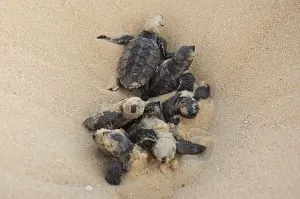
Hawksbill sea turtles mate twice a year. After mating, and in a coordinated event comparable to a homing device, females travel and swims back to where they were hatched. Arriving at the nesting site, females drag their heavy bodies in the beach to dug a nesting hole using their flippers. Each nest contains about 150 eggs where after laying, the females cover up the eggs with sand and goes back to the sea to continue with life.
After 2 months of natural incubation, the eggs hatch. The new hatchlings, each weighing less than 25 grams and 2.5 cm long, will instinctively crawl back to the sea where they become food to birds, crabs and other large predators. It takes 20 years for a hawksbill to become sexually mature and only a few percent will succeed to become a full-grown adult.
Aside from a very low survival rate from hatchling to adult, another reason why hawksbill sea turtles have been included in the critically endangered species list is their vulnerability of fishing net entanglement and being fished out for consumption. As we end this article, may we give our parking words to serve as a warning to those who are still eating Hawksbill sea turtles: since hawksbills eat venomous cnidarians and jellyfish as part of their diet, their flesh contains huge amounts of toxins which can become poisonous to humans when eaten.
Where to Find the Hawksbill
Osa Peninsula, Golfo Dulce, Cahuita National Park, Playa Grande of Guanacaste,
Video courtesy from Rich Coast Diving
References
New Foraging Grounds for Hawksbill: file:///C:/Users/JEFREY/Downloads/20037-45005-1-SM.pdf
National Geographic: http://animals.nationalgeographic.com/animals/reptiles/hawksbill-turtle/
Wikipedia: https://en.wikipedia.org/wiki/Hawksbill_sea_turtle

